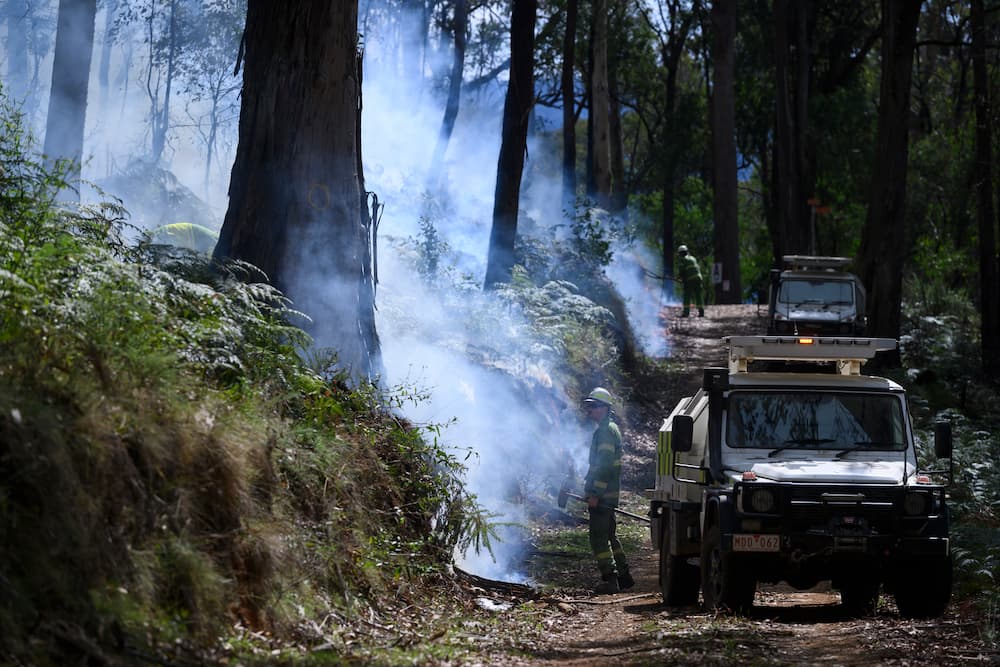
Over summer we saw the benefits of our fuel management program in real time. Early analysis of the bushfires of summer 2025–26 has shown several examples of how planned burning and other fuel management helped firefighters to contain and control bushfires across Victoria.
Planned burn footprints (areas where burns have previously been delivered) consistently helped to:
- moderate the speed and intensity of bushfires
- reduce flame height
- support firefighters to more safely and directly attack fire fronts
These benefits will be assessed more thoroughly through internal and sector-wide review processes, and in agency reconstructions of these events.
Reconstructions draw on a wide range of information, including satellite imagery, aircraft observations, weather data, fire mapping, field inspections, and the experience of firefighters and land managers, to build a clear picture of what happened and why.
They are a key tool for learning and continuous improvement, with findings used in training, pre-season briefings, and information shared with the community.
Case studies
Fuel management isn’t just about reducing risk on paper – it’s about giving firefighters safer options on the fireground and helping protect communities when a fire starts
Page last updated: 22/06/26