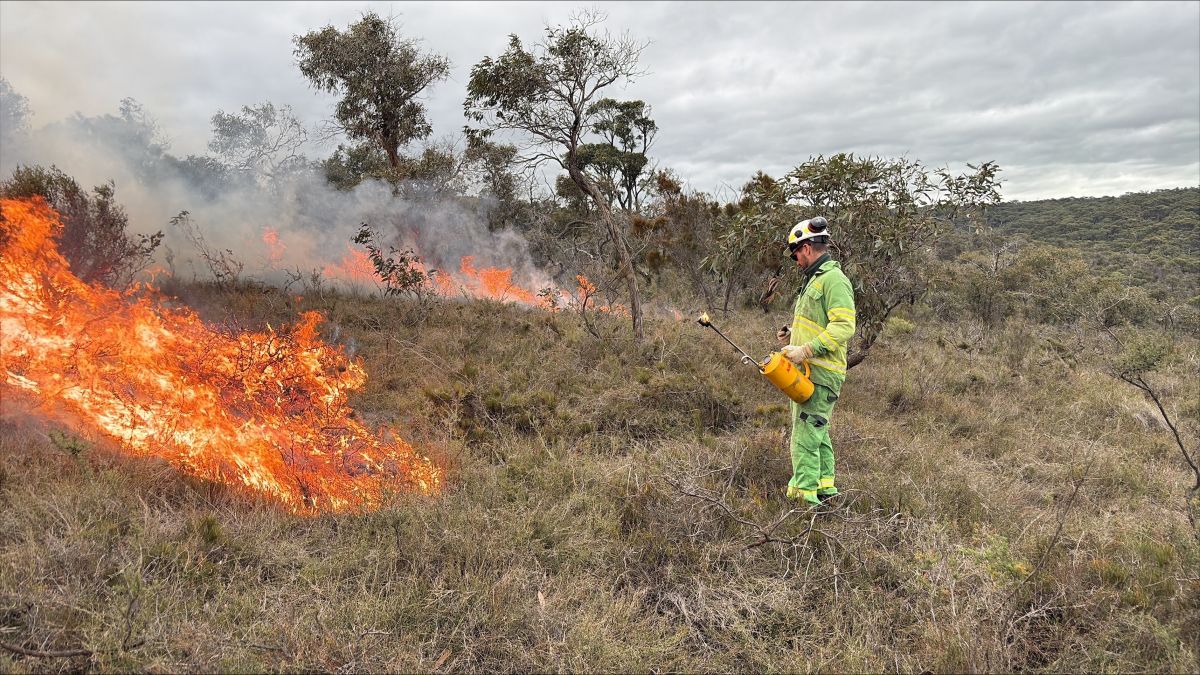
Across the Otway District, winter burning focuses on heathlands, where vegetation can dry out enough to burn even in cooler conditions. Unlike wetter forest areas, these landscapes allow crews to safely carry out smaller burns during short weather windows.
At Anglesea Heath, crews use this approach to create a mosaic of burnt and unburnt areas over time. This means patches of vegetation are a different ages, which supports a wide range of plants and animals and helps build a more resilient ecosystem.
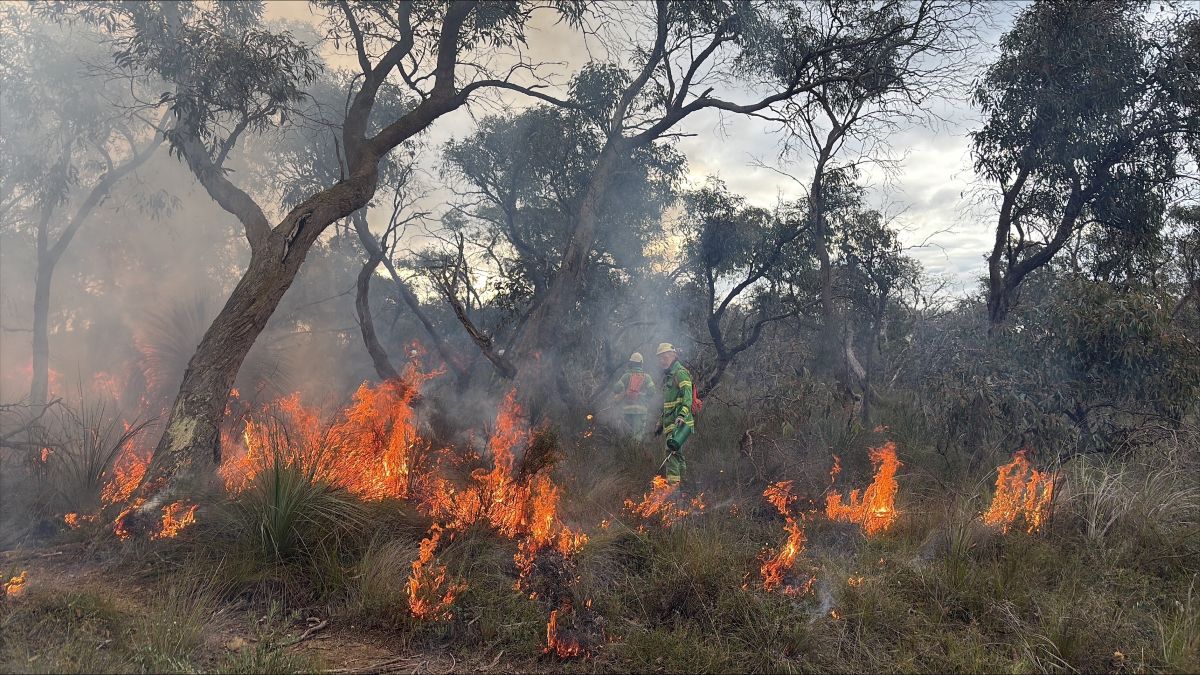
These burns rely on skilled crews who read the landscape and understand how fire behaves in changing conditions including moisture, wind, shade and time of day.
Fires are carefully managed and often self-extinguish as temperatures drop and humidity rises in the afternoon.
This is an ongoing program, with burning carried out in different parts of the heath each year rather than as a one-off treatment.
Purpose
To improve ecosystem health, support biodiversity and create a mosaic of vegetation across the heathland.
Location
Anglesea Heath is a 10,000-hectare are behind Anglesea and Aireys Inlet, however individual planned burns are much smaller and carried out in sections over time rather than burning the entire area at once.
Conditions
Winter conditions allow for safer, lower-intensity burning. Heath can be ready to burn within a short time after rain, making it suitable for small, controlled burns.
On-ground work
Crews take a hands-on approach, using these conditions to guide and learn fro m fire behaviour while keeling burns controlled and safe.
Benefits
- Supports different plant and animal habitats
- Builds more resilient landscape
- Helps reduce bushfire risk
- Strengthens crew skills and knowledge in using fire safely.
Page last updated: 19/06/26