Led by DJAARA’s DJANDAK Wi, the Strathdale Scrub Track Asset Protection Zone using cultural fire burning techniques in Bendigo was more than a burn, it was an important step in understanding if these types of burns could provide not only asset protection, but also cultural outcomes.
Cross-cultural exchange
As Traditional Owners guided the fire, they welcomed a small group from Canada to learn first-hand how cultural fire is used to care for Country in Australia, share stories and strengthen connections across cultures and continents.
Among them was Dr Jennifer Grenz, a Nlaka’pamux woman from the Lytton First Nation and an Assistant Professor at the University of British Columbia’s Faculty of Forestry and Environmental Stewardship. Dr. Grenz’s research is currently focused on culturally informed catastrophic wildfire recovery alongside Interior Salish Communities in the southern interior of British Columbia.
She was joined by three fellow Canadian visitors, who had travelled to Australia with a shared purpose: to learn, connect, and exchange knowledge about cultural fire practices.
“We’ve come to Australia to learn about cultural fire and prescribed burning, but also to build relationships, share knowledge across water and learn from each other,” Dr Grenz explains.
Their journey began in Western Australia before bringing them to Victoria, where they spent time on Country, including several days in Gariwerd (the Grampians) and attending the Scrub Track Cultural Fire, east of Bendigo.
The visit itself was the result of international connections, relationships formed through conferences, shared networks, and a common commitment to revitalising Aboriginal land management practices.
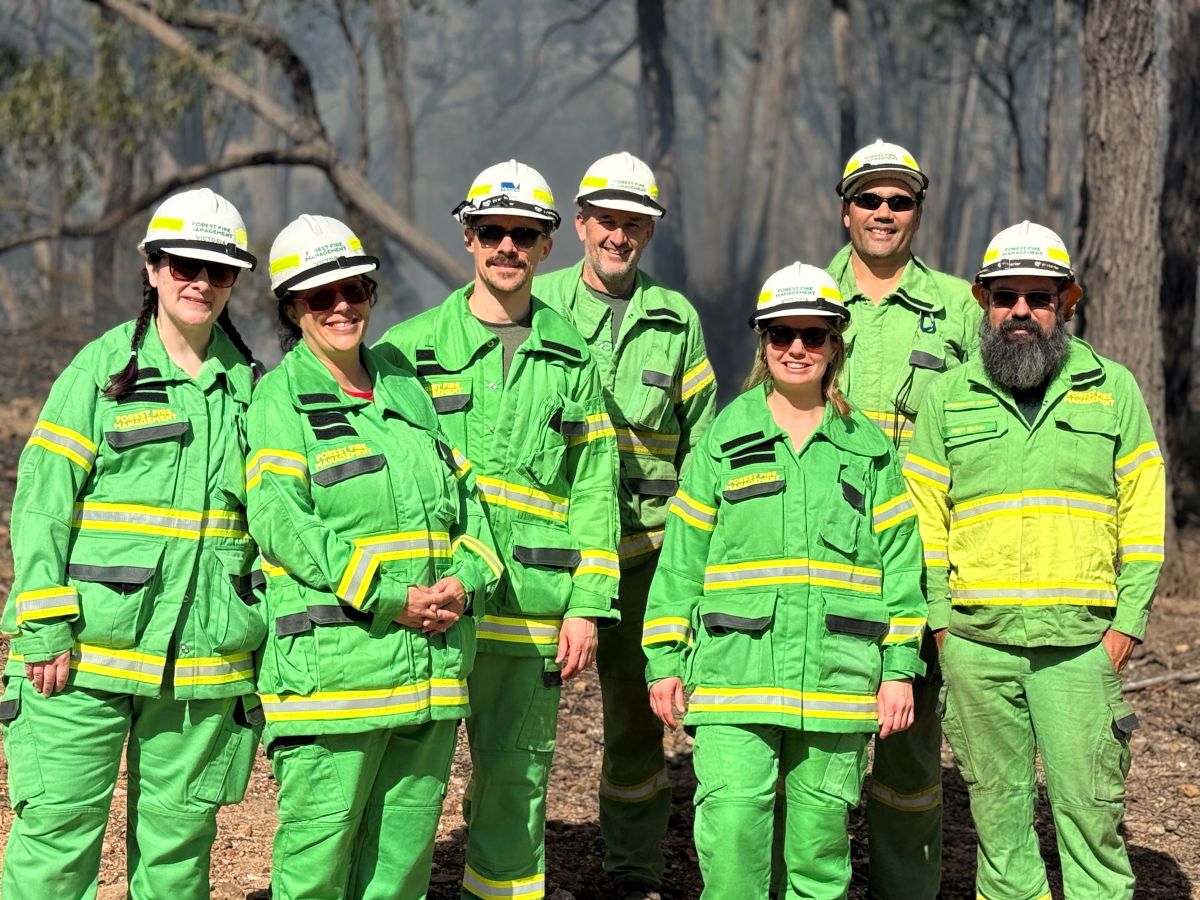
From left to right: Tiffany Traverse, Dr. Jennifer Grenz, Joel Grenz, Trent Gibson, Yolanda Clatworthy, Damien Skurrie and Trent Nelson.
For Jennifer, the experience has been both eye-opening and deeply affirming.
“One of the most amazing things I’ve learned is that while ecosystems and traditions may differ, we share so much more than what separates us,” she says.
“We face similar challenges, but we also share victories as we reclaim and strengthen our stewardship practices.”
Fellow visitor Tiffany Traverse, a Secwépemc woman from the community of Kenpesq’t and an Indigenous researcher, sees strong parallels between the two countries.
“We have very similar colonial histories,” she explains. “For 150 to 200 years, many of our communities have been disconnected from land and from using fire in the way it was traditionally practised. That’s something we share with Australia.”
While landscapes, plants and animals may differ, the principles at the heart of cultural burning, care for Country, respect for knowledge and community connection, remain deeply and remarkably aligned.
Tiffany’s work back home focuses on native and culturally significant seeds and plants, teaching her community about conservation and traditional practices.
Being on Country in Australia, witnessing cultural fire firsthand, adds another layer to that knowledge.
Traditional Owners group representatives from DJAARA, Barengi Gadjin, Eastern Maar and Gunditjmara supported their time in Victoria by sharing their knowledge, cultural leadership, and connection to Country.
The visit to the Scrub Track Cultural Fire was more than an observation – it was a moment of exchange. A space where ideas, experiences, and cultural practices could be shared openly, connecting cultural fire practitioners across borders.
To learn more, about Dr. Grenz’s lab which works in service to Indigenous communities in British Columbia check out Indigenous Ecology Lab and to learn more about her Canadian national bestselling book, Medicine Wheel for the Planet, go to Jennifer Grenz
Page last updated: 22/05/26