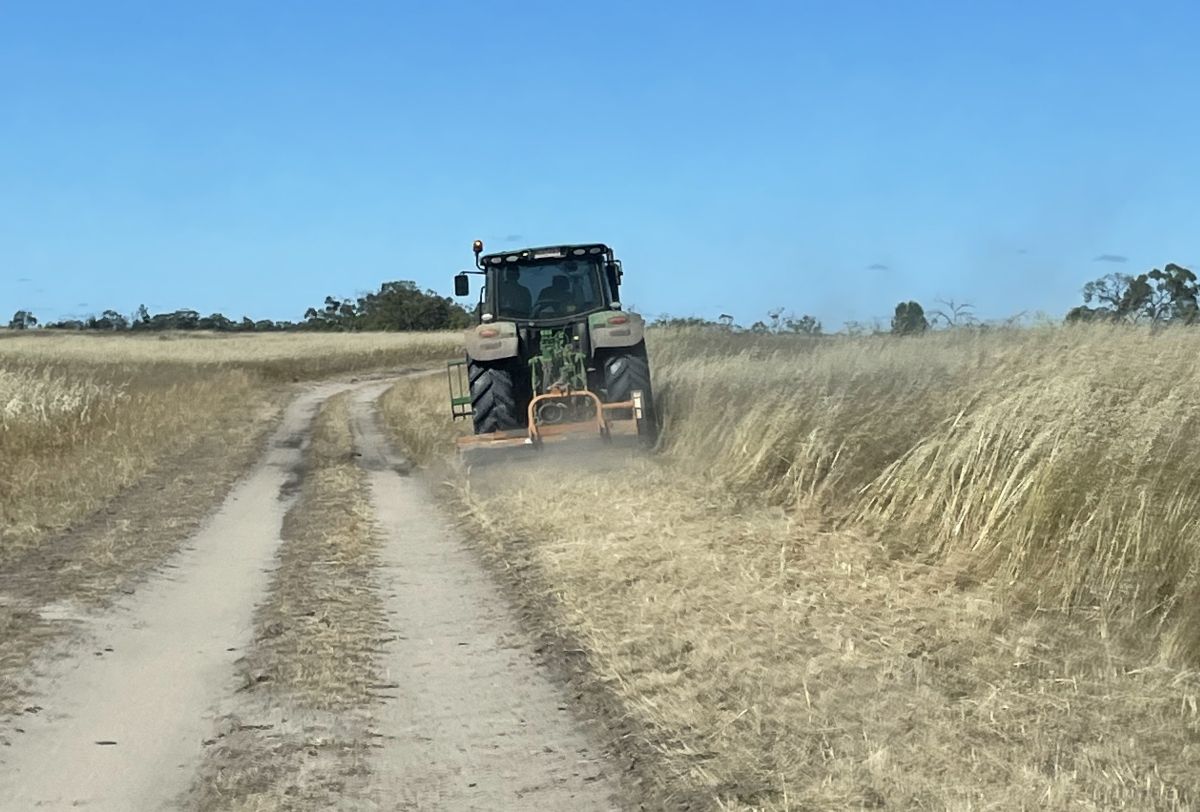
As winter gives way to warmer weather, Forest Fire Management Victoria (FFMVic) crews are ramping up a range of fuel management activities across the state to help reduce bushfire risk ahead of the bushfire season.
While planned burning is the most effective way to reduce bushfire risk, there are also other tools in the box.
Throughout spring and early summer, crews are busy slashing grass, maintaining roads, preparing fuel breaks and managing vegetation in areas where fire may not be the most effective option.
Not all fuel management involves fire
Victoria's landscapes are diverse, and so are the ways FFMVic manages bushfire risk.
In locations close to communities, roads, critical infrastructure and environmentally sensitive areas, crews often use non-burn fuel management treatments such as slashing, mulching, mowing, spraying, fuel break maintenance and road works to reduce fuel levels and improve access.
By mechanically reducing fuel loads, planned burning combined with these additional activities help lower bushfire risk, making fires easier to manage and helping protect communities.
Timing is everything
Across Victoria, FFMVic have begun cutting grass on public land as conditions become suitable in their region. Slashing works are carefully timed to coincide with seasonal grass growth. Starting too early can encourage regrowth and create the need for additional treatment later in the season.
Because Victoria's climate varies from region to region, the timing of slashing programs differs across the state. In some areas, warmer weather arrives earlier, prompting crews to begin works sooner, while other regions may start later depending on local conditions.
Why cut grass?
Grass can become a significant source of fuel during summer, particularly when it dries out. By reducing the amount of grass and other fine fuels such as leaves and fallen branches, crews can help limit fire intensity and slow the spread of bushfires and grassfires.
Across the state, FFMVic strategically slashes more than 10,000 hectares annually.
Fuel breaks ready when they're needed most
A key part of spring preparedness is maintaining Victoria's network of fuel breaks.
Fuel breaks help firefighters move safely through the forest, access active fires and carry out suppression activities more effectively.
Each year, FFMVic maintains more than 900 kilometres of fuel breaks across the state, helping create safer conditions for firefighting operations when bushfires occur.
Keeping roads firefighting-ready
Road maintenance is another important part of bushfire preparedness.
Safe and reliable access across Victoria's forests, parks and public land, allows firefighters to reach bushfires quickly and move personnel, vehicles and equipment across public land when time is critical.
Rapid bushfire response increases our chances of containing bushfire before they spread and impact communities.
Preparing together
Bushfire preparedness is a shared responsibility.
While FFMVic crews continue their work across Victoria's forests, parks and public land, residents can also take steps to prepare their own properties by keeping grass short, clearing leaves and branches, and removing flammable materials from around homes.
Whether it's maintaining fuel breaks, preparing roads or cutting grass ahead of summer, every activity plays a role in reducing bushfire risk and helping keep Victorian communities safer.
For more information visit, Prepare and Get Ready.
Page last updated: 08/10/26